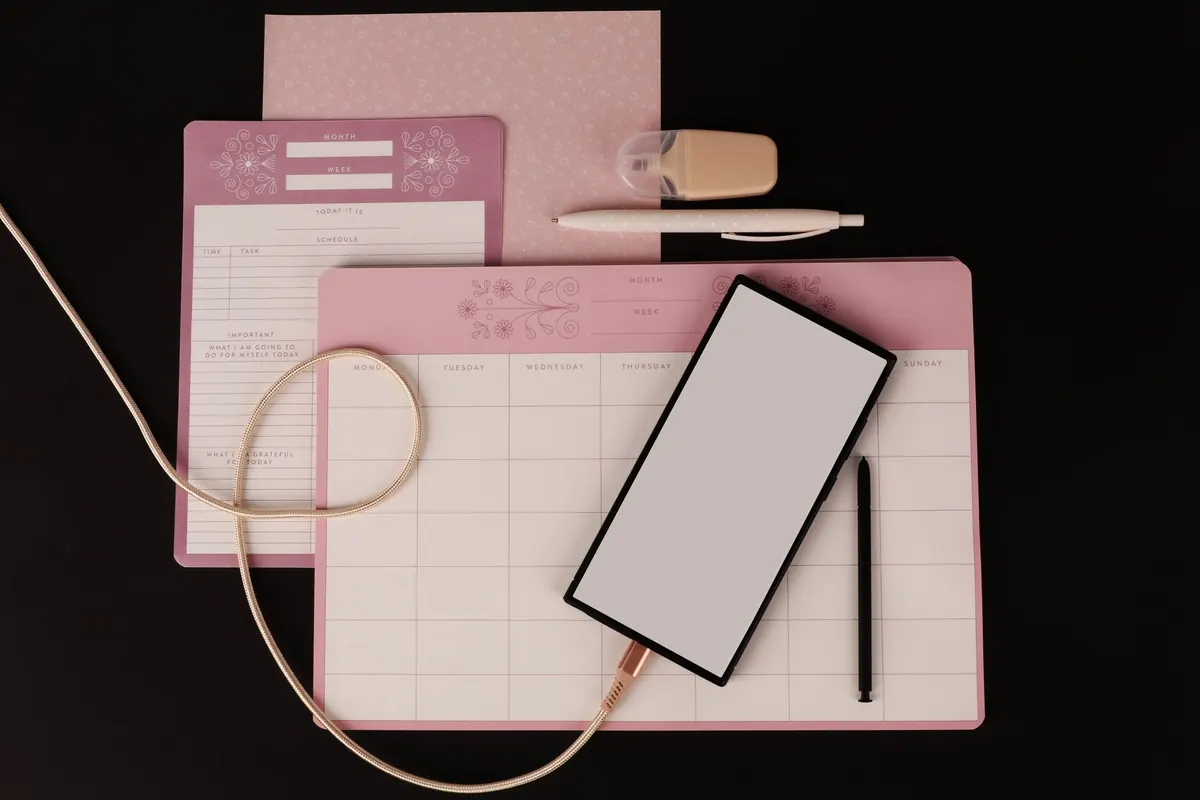
Three pages, longhand, first thing. That is the whole instruction, and it is harder than it sounds. Not because writing three pages takes much effort — most people manage it in twenty minutes — but because it asks you to put words on paper before you have decided whether they are any good. Morning Pages are the opposite of the careful, edited writing most of us do all day. Nobody reads them. Nobody marks them. You are not building an argument or a brand, and the moment you start trying to, the practice stops working.
The habit was popularised by Julia Cameron in The Artist's Way, and it has lasted because it asks so little of you: a pen, some paper, and the twenty minutes you would otherwise spend reading other people's opinions. For anyone who keeps a notebook, it is the least glamorous and most useful page in the stack.
What Morning Pages Actually Are
Morning Pages are three pages of continuous longhand writing, done as close to waking as you can manage. Stream of consciousness, no structure, no topic you have to stick to. If you run out of things to say, you say that. If you repeat yourself, you repeat yourself. The pen keeps moving until the third page is full.
They are not a diary. A diary looks back at the day and tries to shape it into something. Morning Pages come before the shaping. They are the noise in the system, written out so it stops competing with your thinking for the rest of the day.
A page of it looks like this:
Thursday. Slept badly, the radiator clicked all night. I don't want to do this. I'm irritated about the message I sent at eleven o'clock, though I'm not sure I'm irritated about the message — I think I'm irritated that I said yes to the thing in March and haven't admitted it yet. Three pages is a lot. What would I actually do if I cancelled? Probably nothing bad. The kitchen is a mess. I keep thinking about the idea for the walking club thing, which might be nothing. Write it down anyway...
It is dull. It is also where the useful bits hide.
Why Three Pages, and Why By Hand
Three pages is a deliberately awkward amount. One page is easy to dash off and easy to fake. Three pages forces you past the polite version of your thoughts and into the bit underneath, where you stop performing and start noticing.
Writing by hand matters for a simpler reason: it is slower than thinking. Typing can almost keep up with the internal monologue, which means you can skim across the surface and finish with nothing. Longhand forces a gap between the thought and the sentence, and that gap is where you catch things — half-formed ideas, grudges you didn't know you were holding, sentences you like the shape of.
Two other things happen quietly:
- No audience means no editing. You cannot write for a reader who does not exist, so the voice that usually interferes has nothing to do.
- Repetition becomes visible. Write three pages a day for a fortnight and you will see the same three worries cycling. That is information. Some of it is clutter you can dismiss; some of it is a decision you have been avoiding.
Getting Started: A Routine That Survives a Bad Week
- Keep the kit in one place. A notebook and a pen that lives with it, next to the kettle or on the bedside table. Friction is what kills the habit, not laziness.
- Write before you look at a screen. The phone is the main competitor. Even ten minutes of email first changes what comes out on the page.
- Decide on a stopping rule. Either three pages or twenty-five minutes, whichever you prefer. Pages suit some people, timers suit others. Pick one and stop negotiating each morning.
- Date the top of the page. It takes two seconds and turns a pile of loose writing into something you can flick back through later.
- Keep the pen moving. If you stall, write "I don't know what to write next" until something arrives. It always does.
- Don't read it back straight away. Give it a week, at least. Rereading immediately invites judgement, and judgement is what you are trying to get away from.
What to Write When There Is Nothing to Write
Everybody hits the morning where the page feels like a wide empty field. A few reliable openings:
Start with the boring facts
What time you woke, what the weather is doing, what you can hear, what is on the list for today. Three sentences of dull description usually drags something real up behind it.
Complain properly
Most of what clogs a morning is irritation you have been too well-mannered to say out loud. Say it on the page. Write it badly, exaggerate it, get it out. Then notice whether the complaint is really about the thing you named.
Ask yourself a question and answer it
"What am I avoiding?" "What would I do if nobody would ever know?" "What is the smallest version of this project?" Leave the question on the page and write whatever arrives, even if the answer is unhelpful.
Describe something in the room
Useful on flat, tired mornings. Pick an object and write about it for a paragraph. The attention warms the writing up, and you will usually drift into something you actually wanted to say.
Common Snags, and What to Do About Them
- Your hand aches. Write larger, use a pen that flows, and split the pages across the morning if you need to. It eases within a week or two.
- It feels like the same entry every day. Good — that is the repetition doing its job. Underneath it, add one line about what you are going to do rather than what you feel.
- You feel guilty about the negativity. The pages are not a character reference. Nobody is grading your attitude.
- You miss four days. Start again. There is no streak to protect and no catching up to do. Skip the missed pages entirely.
- You want to type them. You can, but expect more speed and less honesty. If you do type, turn off spellcheck and don't reread before saving.
One thing worth saying plainly: if the same heavy subject fills the pages week after week — grief, anxiety, a decision you cannot make alone — that is a signal to talk to someone qualified rather than to keep circling it in a notebook. The pages are a clearing tool, not a substitute for help.
Making It Stick
Set the bar low enough that a bad night cannot break it. Three pages is the classic shape of the practice, but fifteen minutes of longhand is better than a perfect routine you abandon by Thursday. Put the notebook where you will trip over it, write before the phone, and let the pages be dull.
Then use what you find. Morning Pages are the clearing, not the crop. Once a week, read back through and pull anything worth keeping — an idea, a sentence, a decision you have finally made — into a proper notes system where you will actually see it again. The clutter goes in the bin. The three lines that mattered go somewhere you can find them.
Photo: Engin_Akyurt / Pixabay